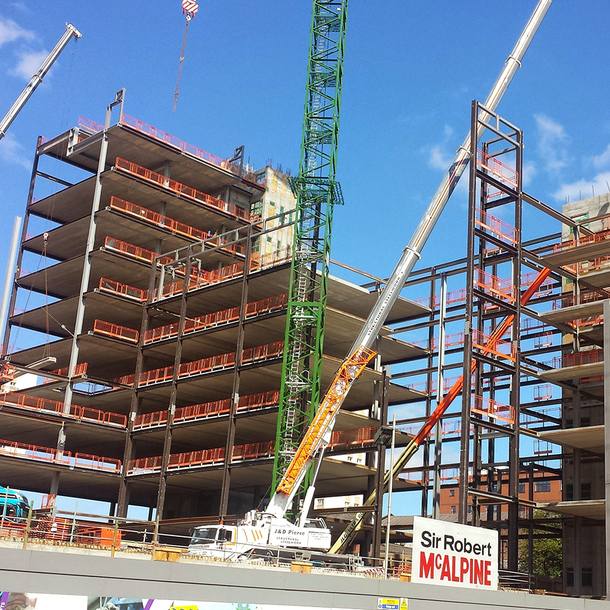
Glasgow City College Campus
A consortium of businesses, led by Sir Robert McAlpine, was chosen to build a new campus development for Glasgow City College. This huge construction project involved the redevelopment of the college’s sites on Cathedral Street and at Thistle Street to provide two campuses, that together are capable of catering for 40,000 students and 1,200 staff. The two campuses have been designed by architects Reiach & Hall and Michael Laird Architects.
The new Glasgow City College campuses will play a vital role in education and the investment reinforces the city’s commitment to put it at the heart of skills development in Scotland. The project will be a significant boost for the city, and it will enhance the college’s reputation as an educational institution.
The scheme is publicly and privately financed with funding support from the Scottish Government via the Scottish Funding Council (SFC) and from the college’s financial reserves. The European Investment Bank has also approved up to £100m of financing in principle.
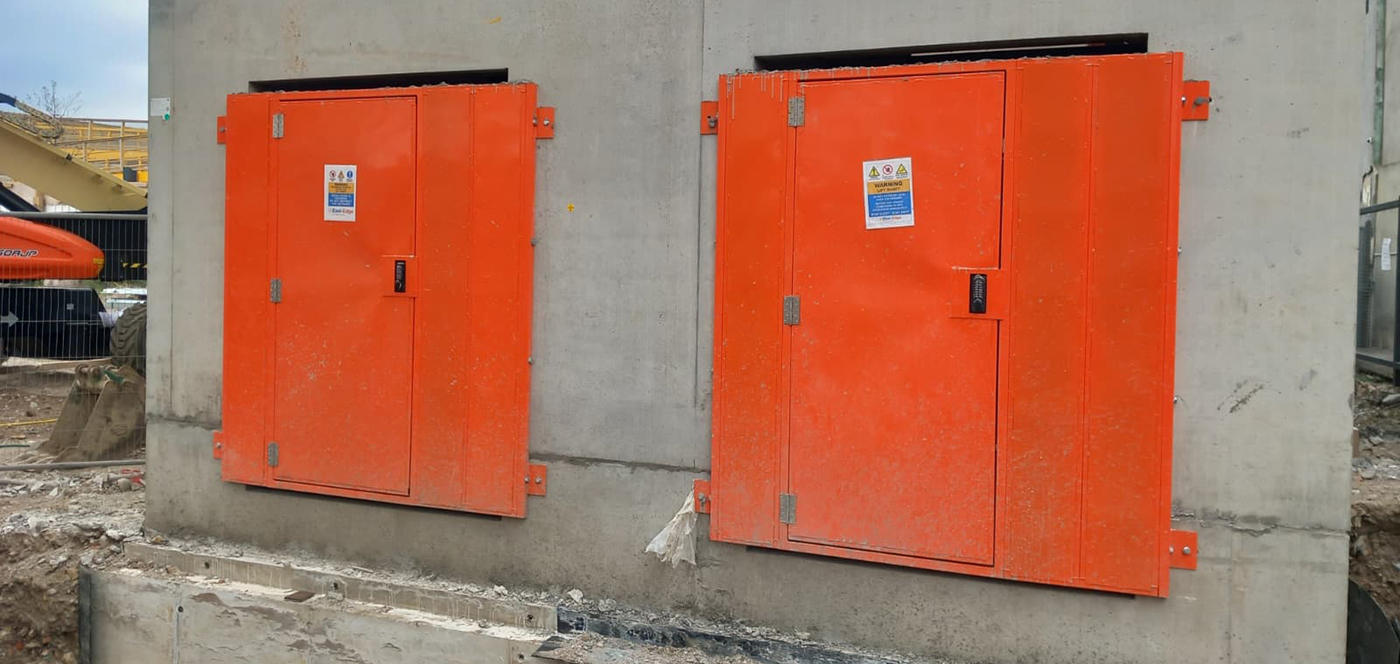
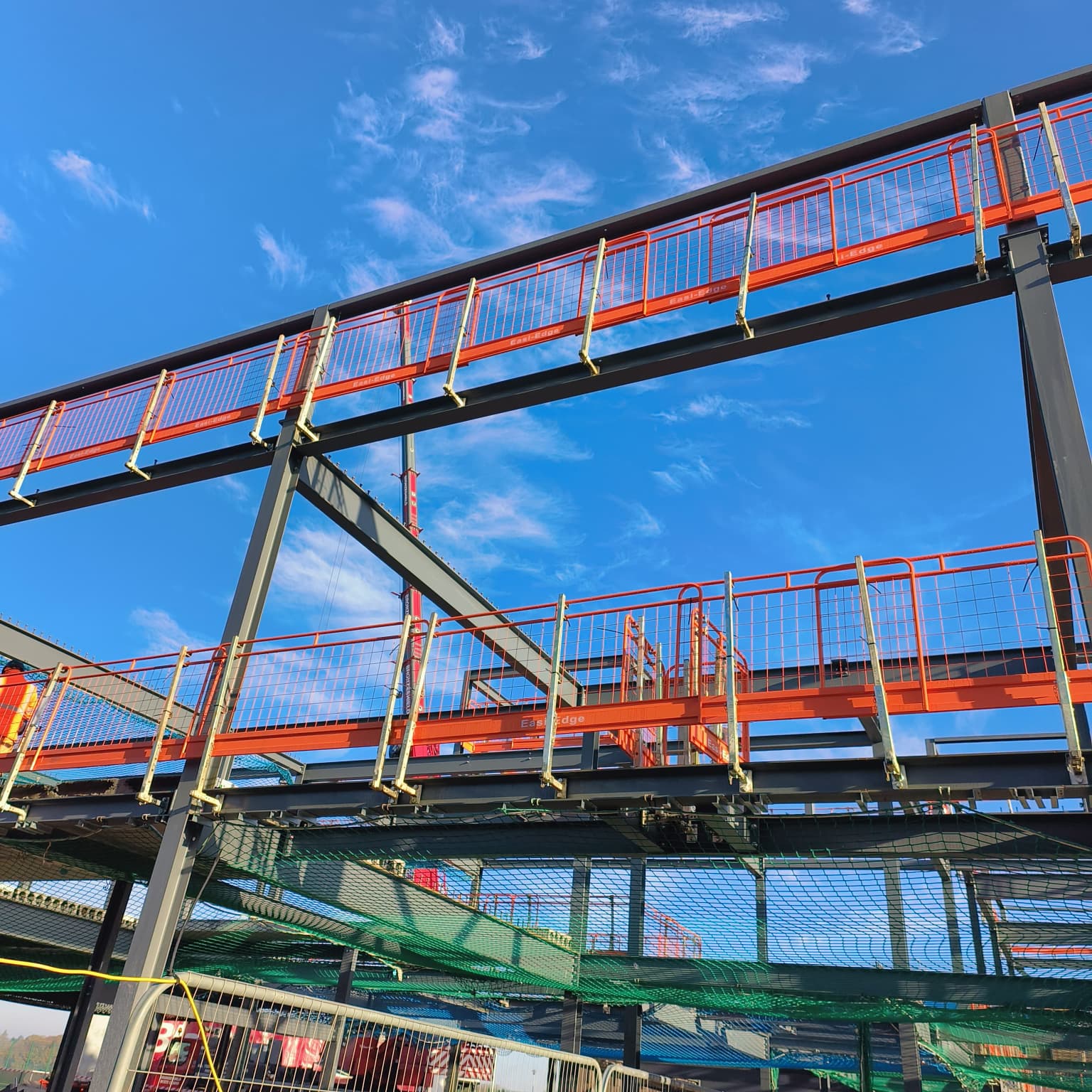
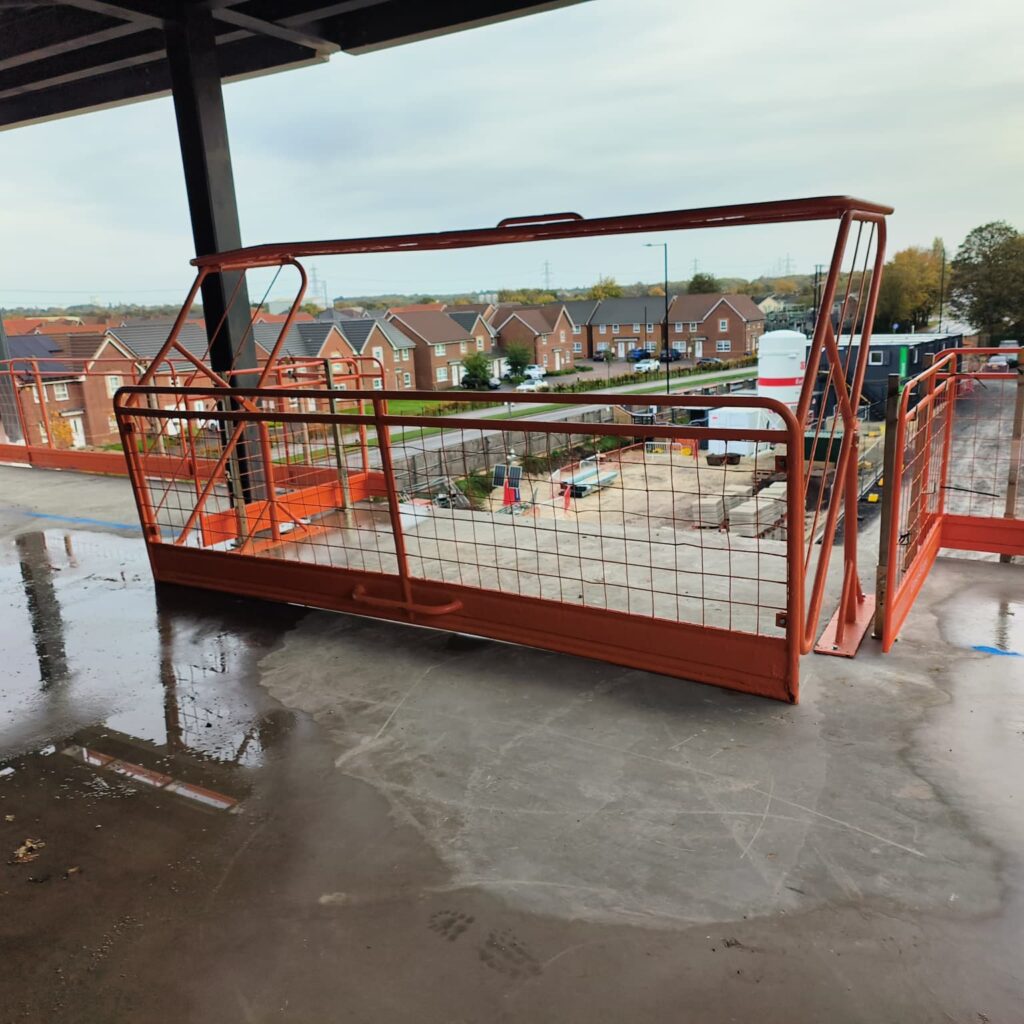
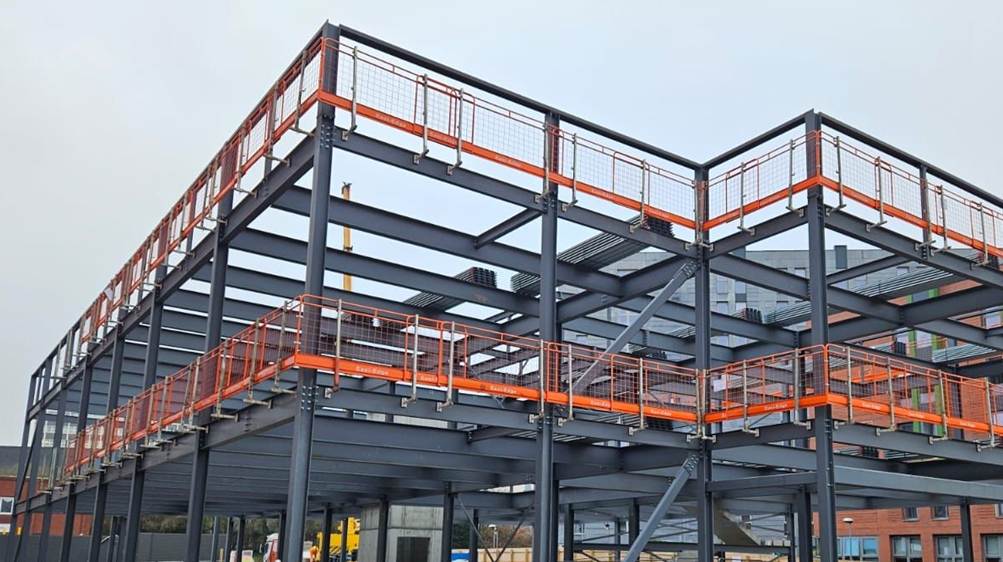
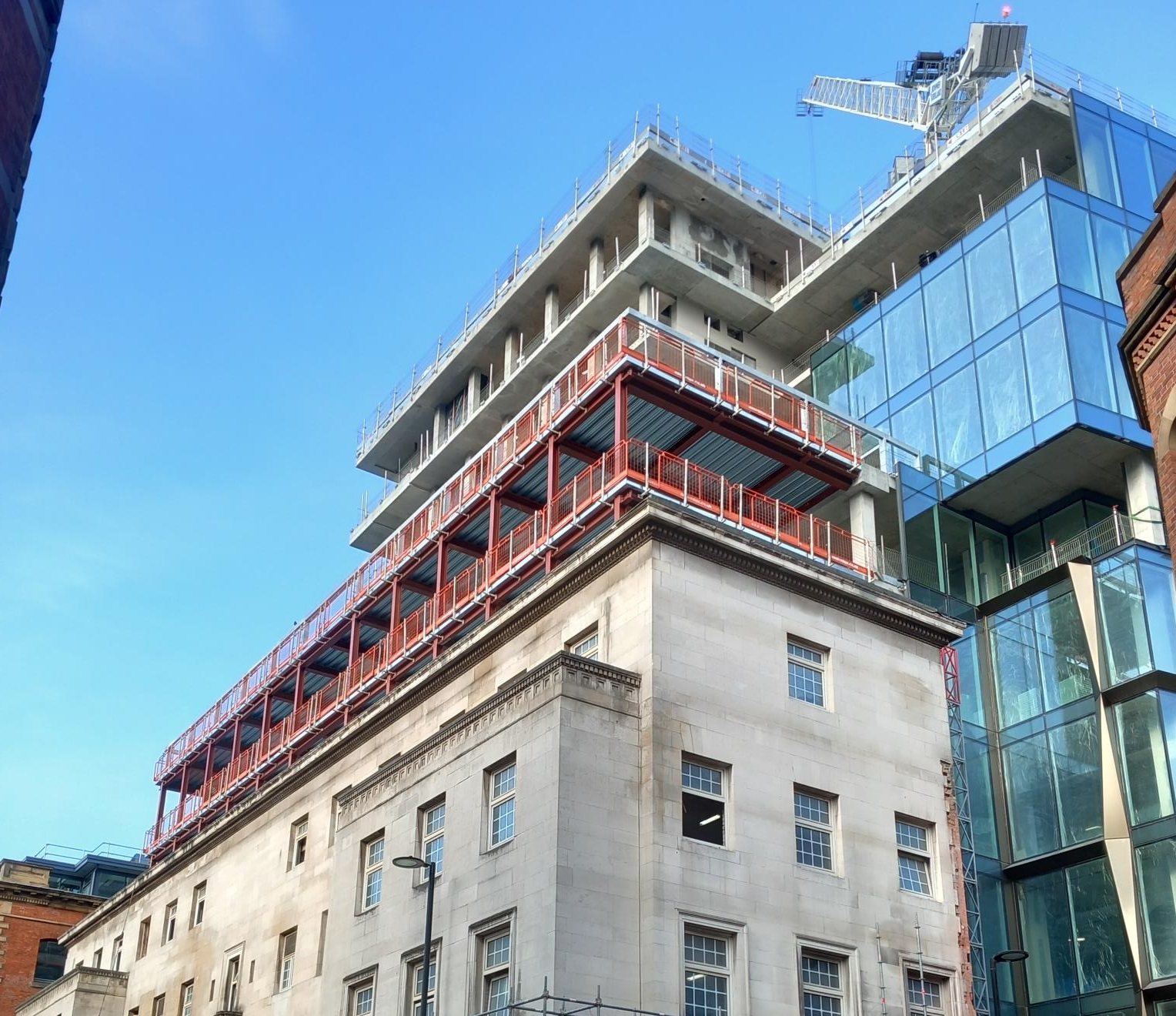
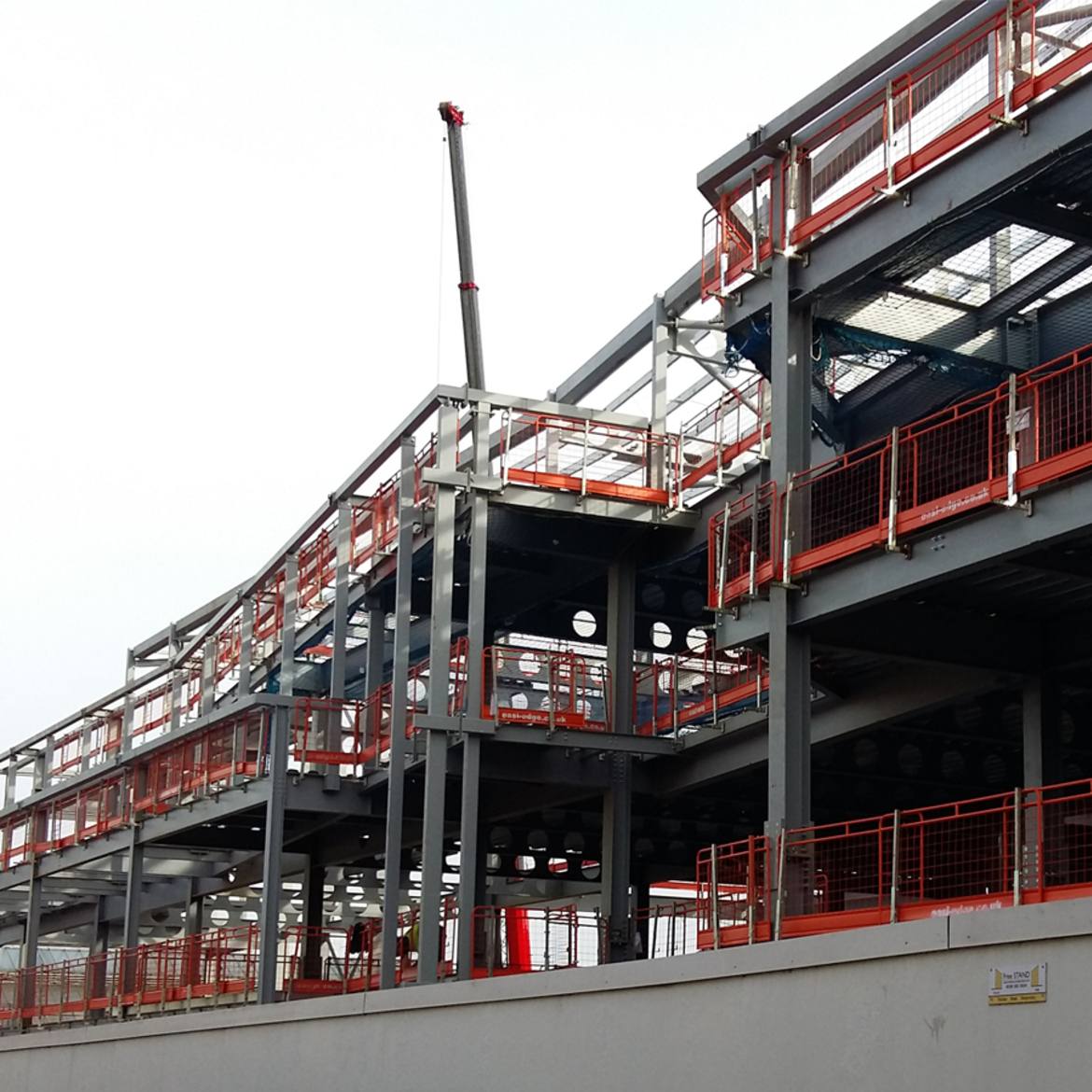
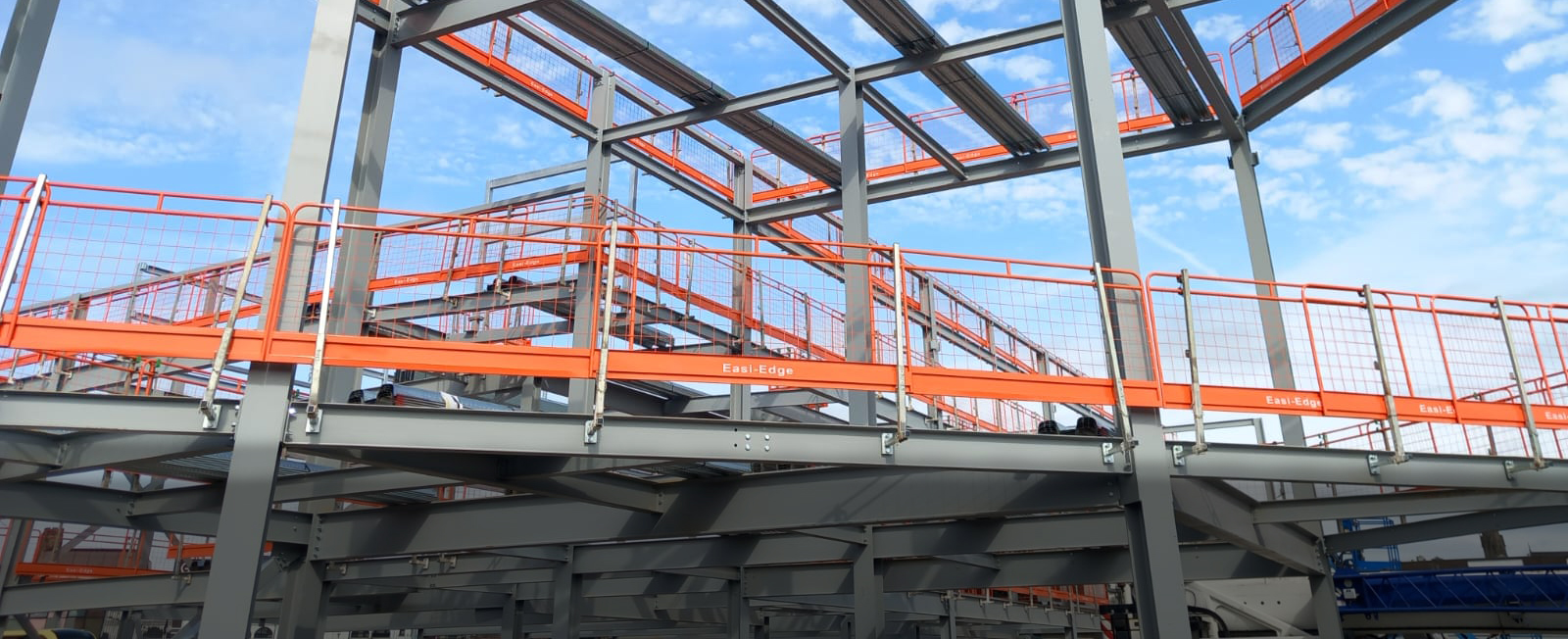
This is one of the biggest projects that Easi-Edge has ever been involved with and during construction we supplied almost 5 miles of edge protection barriers for the site. The new City Campus building contains elements of the College’s six major faculties: Building, Engineering and Energy; Business & Enterprise; Creative Industries; Leisure and Lifestyle; and Library and Learning Technologies. The 60,000 square metre building includes around 300 classrooms as well as lecture theatres and specialist facilities for blended learning.
There is a multi-discipline construction hall, industry-standard hair and beauty salons, computer suites and a ‘Faculty of Creative Industries’. There is also a fully equipped Food and Hospitality Faculty, a business school, and Sports Scotland-standard sports facilities.
One of the biggest challenges of creating an open and inspiring learning space for so many students was that different parts of the City Campus had a 10 metre fall between St Mungo Avenue and Cathedral Street. To overcome this the landscape architects created a terraced public area that not only provided access to the main entrance, but also offers opportunities for students to sit and socialise.
A number of sustainable elements and technologies were incorporated into the design, which include passive heating and cooling from exposed thermal mass. This helped to achieve a BREEAM ‘Excellent’ rating.